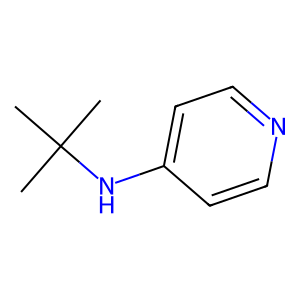
N-tert-butylpyridin-4-amine
CAS No.:
258874-61-2
M. Wt:
150.22100
M. Fa:
C9H14N2
InChI Key:
-
Names and Identifiers of N-tert-butylpyridin-4-amine
CAS Number |
258874-61-2 |
|---|---|
IUPAC Name |
N-tert-butylpyridin-4-amine |
Canonical SMILES |
CC(C)(C)NC1=CC=NC=C1 |
Physical and chemical properties of N-tert-butylpyridin-4-amine
Exact Mass |
150.11600 |
|---|---|
LogP |
1.71390 |
Molecular Formula |
C9H14N2 |
Molecular Weight |
150.22100 |
PSA |
28.15000 |
Safety Information of N-tert-butylpyridin-4-amine

Applications of N-tert-butylpyridin-4-amine
N-tert-butylpyridin-4-amine finds applications across several domains:
- Pharmaceuticals: As a building block for synthesizing drugs targeting various diseases due to its biological activity.
- Agriculture: Potential use in developing agrochemicals that leverage its antimicrobial properties.
- Material Science: Utilization in creating polymers or materials that require specific functional groups for enhanced performance.
These applications highlight its versatility and importance in both research and industry.
Interaction Studies of N-tert-butylpyridin-4-amine
Interaction studies involving N-tert-butylpyridin-4-amine focus on:
- Protein Binding: Understanding how this compound interacts with proteins can provide insights into its pharmacokinetics and efficacy as a drug candidate.
- Metal Coordination: Investigating how it binds to metal ions could reveal potential catalytic properties or applications in coordination chemistry.
- Enzyme Inhibition: Studies assessing its ability to inhibit specific enzymes may elucidate mechanisms by which it exerts biological effects.
These studies are crucial for evaluating the compound's potential therapeutic uses and understanding its mechanism of action.
Biological Activity of N-tert-butylpyridin-4-amine
N-tert-butylpyridin-4-amine has been studied for its potential biological activities. Compounds containing pyridine rings are often associated with various pharmacological effects, including:
- Antimicrobial Activity: Some derivatives show effectiveness against bacterial strains due to their ability to disrupt cellular processes.
- Anticancer Properties: Certain studies suggest that compounds similar to N-tert-butylpyridin-4-amine may inhibit tumor growth through mechanisms involving apoptosis or cell cycle arrest.
- Neuroprotective Effects: Pyridine derivatives have been explored for their ability to protect neuronal cells from oxidative stress and neurodegeneration.
These activities indicate that N-tert-butylpyridin-4-amine could serve as a lead compound in drug development.