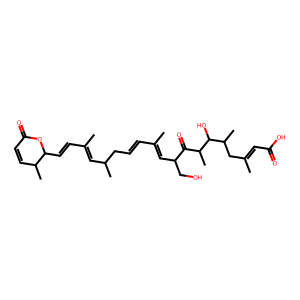
PD 124895
Names and Identifiers of PD 124895
CAS Number |
107140-30-7 |
|---|---|
IUPAC Name |
9-(hydroxymethyl)-3,5,7,11,15,17-hexamethyl-19-(3-methyl-6-oxidanylidene-2,3-dihydropyran-2-yl)-6-oxidanyl-8-oxidanylidene-nonadeca-2,10,12,16,18-pentaenoic acid |
Canonical SMILES |
CC1C=CC(=O)OC1C=CC(=CC(C)CC=CC(=CC(CO)C(=O)C(C)C(C(C)CC(=CC(=O)O)C)O)C)C |
Physical and chemical properties of PD 124895
Boiling Point |
754.2ºC at 760 mmHg |
|---|---|
Density |
1.118g/cm3 |
Exact Mass |
542.32400 |
Flash Point |
236.5ºC |
Index of Refraction |
1.554 |
LogP |
5.36700 |
Molecular Formula |
C32H46O7 |
Molecular Weight |
542.70 |
PSA |
121.13000 |
Vapour Pressure |
2.96E-26mmHg at 25°C |
Applications of PD 124895
Kazusamycin B has several potential applications:
- Antitumor Therapy: Due to its cytotoxic properties, it is being explored as a treatment option for various cancers.
- Antibiotic Development: Its effectiveness against resistant bacterial strains positions it as a candidate for new antibiotic formulations.
- Research Tool: Kazusamycin B serves as a valuable compound in biochemical research, particularly in studies related to cancer biology and microbial resistance mechanisms.
Interaction Studies of PD 124895
Studies on kazusamycin B's interactions reveal insights into its mechanism of action. It has been shown to interact with specific cellular targets involved in tumor cell proliferation and survival. These interaction studies are critical for understanding how kazusamycin B can be effectively utilized in therapeutic settings and how it can be modified to enhance efficacy or reduce side effects.
Biological Activity of PD 124895
Kazusamycin B is primarily recognized for its significant antitumor activity. It has demonstrated cytotoxic effects against various human and mouse tumor cell lines, making it a candidate for further development as an anticancer agent. Its mechanism of action involves disrupting cellular processes critical for tumor growth and survival. Additionally, it shows promise in combating antibiotic-resistant bacteria, adding to its potential therapeutic applications.