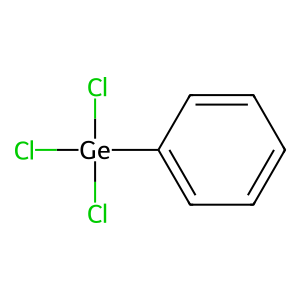
Phenyltrichlorogermane
CAS No.:
1074-29-9
M. Wt:
256.103
M. Fa:
C6H5Cl3Ge
InChI Key:
CIWQSBMDFPABPQ-UHFFFAOYSA-N
Appearance:
Liquid
Names and Identifiers of Phenyltrichlorogermane
CAS Number |
1074-29-9 |
|---|---|
EC Number |
214-039-8 |
IUPAC Name |
trichloro(phenyl)germane |
InChI |
InChI=1S/C6H5Cl3Ge/c7-10(8,9)6-4-2-1-3-5-6/h1-5H |
InChIKey |
CIWQSBMDFPABPQ-UHFFFAOYSA-N |
Canonical SMILES |
C1=CC=C(C=C1)[Ge](Cl)(Cl)Cl |
Physical and chemical properties of Phenyltrichlorogermane
Boiling Point |
232.8±9.0 °C at 760 mmHg |
|---|---|
Density |
1.584 g/mL at 25 °C(lit.) |
Exact Mass |
255.866867 |
Flash Point |
92.2±16.1 °C |
Index of Refraction |
n20/D 1.554(lit.) |
LogP |
8.09 |
Melting Point |
<0°C |
Molecular Formula |
C6H5Cl3Ge |
Molecular Weight |
256.103 |
Storage condition |
2-8°C |
Vapour Pressure |
0.1±0.4 mmHg at 25°C |
Safety Information of Phenyltrichlorogermane

Applications of Phenyltrichlorogermane
Phenyltrichlorogermane finds applications in various fields:
- Organic Synthesis: It serves as an activating reagent in Grignard reactions and other organic transformations.
- Materials Science: The compound is explored for its potential use in semiconductor materials and as a precursor for other organogermanes.
- Catalysis: Due to its reactive nature, it plays a role in catalyzing specific
Interaction Studies of Phenyltrichlorogermane
Interaction studies involving phenyltrichlorogermane primarily focus on its reactivity with carbonyl compounds. It has shown tendencies to add across double bonds in certain ketones, indicating its utility in synthesizing more complex organic molecules. Further research is necessary to fully understand its interaction profile with various biological systems.
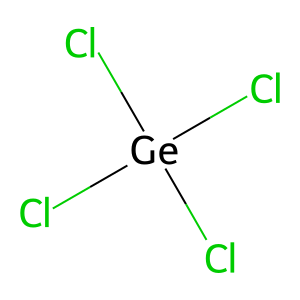 Cas:10038-98-9

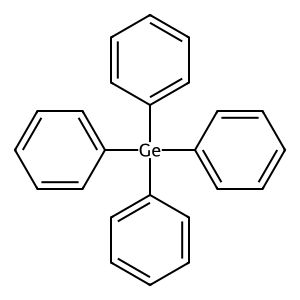 Cas:1048-05-1

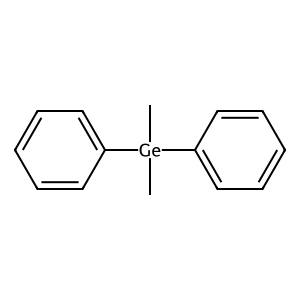 Cas:7301-42-0
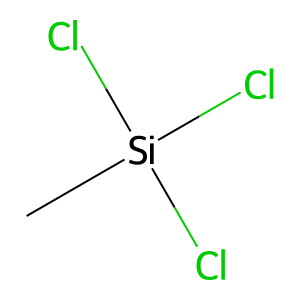 Cas:75-79-6
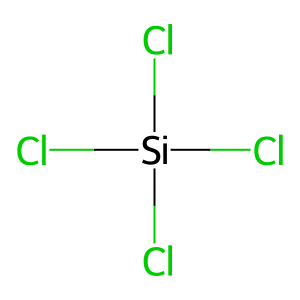 Cas:10026-04-7