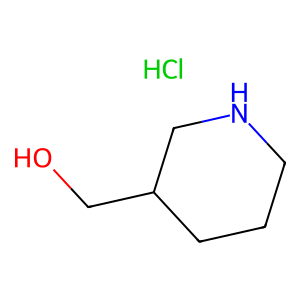
Piperidin-3-ylmethanol hydrochloride
CAS No.:
400771-49-5
M. Wt:
151.63400
M. Fa:
C6H14ClNO
InChI Key:
VLFTUQPTEOPYGV-UHFFFAOYSA-N
Appearance:
Pale-green Solid
Names and Identifiers of Piperidin-3-ylmethanol hydrochloride
CAS Number |
400771-49-5 |
|---|---|
MDL Number |
MFCD08752661 |
IUPAC Name |
piperidin-3-ylmethanol;hydrochloride |
InChI |
InChI=1S/C6H13NO.ClH/c8-5-6-2-1-3-7-4-6;/h6-8H,1-5H2;1H |
InChIKey |
VLFTUQPTEOPYGV-UHFFFAOYSA-N |
Canonical SMILES |
C1CC(CNC1)CO.Cl |
UNSPSC Code |
12352100 |
Physical and chemical properties of Piperidin-3-ylmethanol hydrochloride
Exact Mass |
151.07600 |
|---|---|
LogP |
1.10910 |
Molecular Formula |
C6H14ClNO |
Molecular Weight |
151.63400 |
PSA |
32.26000 |
Safety Information of Piperidin-3-ylmethanol hydrochloride

Applications of Piperidin-3-ylmethanol hydrochloride
Piperidin-3-ylmethanol hydrochloride has several applications across various fields:
- Pharmaceuticals: It serves as an intermediate in the synthesis of drugs targeting neurological and oncological conditions.
- Chemical Research: The compound is utilized in studies exploring structure-activity relationships in drug development.
- Material Science: Its derivatives may find use in creating new materials with specific properties due to their unique structural attributes.
Interaction Studies of Piperidin-3-ylmethanol hydrochloride
Interaction studies involving piperidin-3-ylmethanol hydrochloride focus on its binding affinities and mechanisms of action with various biological targets:
- Receptor Binding Studies: Investigations into how this compound interacts with neurotransmitter receptors (e.g., muscarinic acetylcholine receptors) are crucial for understanding its potential therapeutic effects.
- Enzyme Inhibition Studies: Some derivatives have been evaluated for their ability to inhibit enzymes involved in disease processes, providing insights into their mechanisms of action and potential therapeutic roles.
Biological Activity of Piperidin-3-ylmethanol hydrochloride
Research indicates that piperidine derivatives, including piperidin-3-ylmethanol hydrochloride, exhibit various biological activities:
- Anticancer Properties: Certain derivatives have shown cytotoxic effects against cancer cell lines, suggesting potential for development as anticancer agents.
- Neuropharmacological Effects: Compounds containing piperidine moieties have been studied for their interactions with neurotransmitter receptors, indicating possible applications in treating neurological disorders.
- Antimicrobial Activity: Some studies suggest that piperidine derivatives possess antimicrobial properties, making them candidates for further investigation in infectious disease treatments.
Physical sample testing spectrum (NMR) of Piperidin-3-ylmethanol hydrochloride
