
Piperidin-4-yl acetate
Names and Identifiers of Piperidin-4-yl acetate
CAS Number |
73775-92-5 |
|---|---|
IUPAC Name |
piperidin-4-yl acetate |
InChI |
InChI=1S/C7H13NO2/c1-6(9)10-7-2-4-8-5-3-7/h7-8H,2-5H2,1H3 |
InChIKey |
XCOWFHRNGJAHDO-UHFFFAOYSA-N |
Canonical SMILES |
CC(=O)OC1CCNCC1 |
Physical and chemical properties of Piperidin-4-yl acetate
Exact Mass |
143.09500 |
|---|---|
LogP |
0.63030 |
Molecular Formula |
C7H13NO2 |
Molecular Weight |
143.18400 |
PSA |
38.33000 |
Applications of Piperidin-4-yl acetate
Piperidin-4-yl acetate finds applications in several fields:
- Pharmaceutical Industry: It serves as an intermediate for synthesizing various therapeutic agents, particularly those targeting neurological disorders and pain management.
- Organic Synthesis: The compound is used as a building block in the development of more complex organic molecules due to its reactive functional groups.
- Chemical Research: It is utilized in studies exploring new
Interaction Studies of Piperidin-4-yl acetate
Research on piperidin-4-yl acetate includes interaction studies that assess its binding affinity to various receptors and enzymes. These studies are crucial for understanding its pharmacological potential and guiding further drug design efforts. For instance, derivatives have been investigated for their interactions with GPR119 receptors, which play a role in glucose metabolism and insulin secretion.
Biological Activity of Piperidin-4-yl acetate
Piperidin-4-yl acetate exhibits several biological activities, making it a compound of interest in pharmacological research. It has been evaluated for its potential as a precursor in the synthesis of bioactive compounds, including those targeting G-protein-coupled receptors, which are crucial in many physiological processes. Additionally, derivatives of piperidine compounds have shown promise as analgesics and anti-inflammatory agents in various studies.
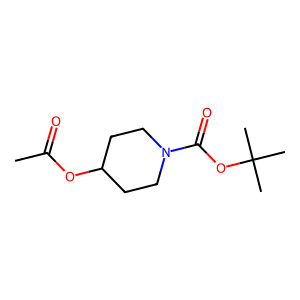 Cas:850452-53-8

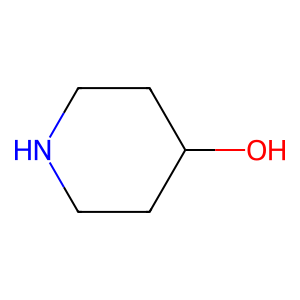 Cas:5382-16-1
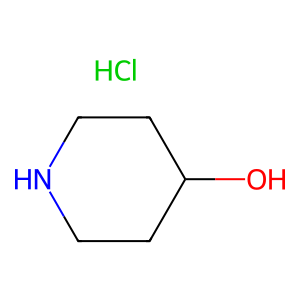 Cas:5382-17-2