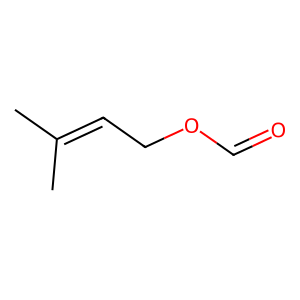
Prenyl formate
CAS No.:
68480-28-4
M. Wt:
114.14200
M. Fa:
C6H10O2
InChI Key:
ZCROFVOAWLRGFY-UHFFFAOYSA-N
Names and Identifiers of Prenyl formate
CAS Number |
68480-28-4 |
|---|---|
EC Number |
270-906-0 |
IUPAC Name |
3-methylbut-2-enyl formate |
InChI |
InChI=1S/C6H10O2/c1-6(2)3-4-8-5-7/h3,5H,4H2,1-2H3 |
InChIKey |
ZCROFVOAWLRGFY-UHFFFAOYSA-N |
Canonical SMILES |
CC(=CCOC=O)C |
UNII |
77XFK1MOL6 |
Physical and chemical properties of Prenyl formate
Boiling Point |
139.6ºC at 760mmHg |
|---|---|
Density |
0.920-0.927 |
Exact Mass |
114.06800 |
Flash Point |
41.4ºC |
Index of Refraction |
1.410-1.415 |
LogP |
1.76150 |
Molecular Formula |
C6H10O2 |
Molecular Weight |
114.14200 |
PSA |
26.30000 |
Solubility |
Soluble (in ethanol) |
Applications of Prenyl formate
Prenyl formate has several applications across different fields:
- Pharmaceuticals: Its derivatives are explored for their potential use in drug development due to their biological activities.
- Natural Products Chemistry: It serves as an important building block in synthesizing more complex natural products.
- Agricultural Chemistry: Compounds derived from prenylated structures may exhibit pest-repellent properties or enhance plant resistance against pathogens.
Interaction Studies of Prenyl formate
Studies on the interactions of prenylated compounds reveal that they can modulate various biological pathways. For example:
- Prenylated flavonoids have been shown to interact with cellular signaling pathways involved in inflammation and cancer progression.
- They may also influence enzyme activities related to metabolic processes, such as α-glucosidase inhibition, which has implications for diabetes management.
Biological Activity of Prenyl formate
Prenylated compounds, including prenyl formate, exhibit a range of biological activities. Research indicates that prenylated flavonoids possess significant antioxidant properties, which contribute to their potential therapeutic effects against various diseases. Notably, these compounds have been studied for their anticancer, anti-inflammatory, and antimicrobial activities. The presence of the prenyl group often enhances the bioactivity compared to non-prenylated counterparts due to improved lipophilicity and cellular uptake.
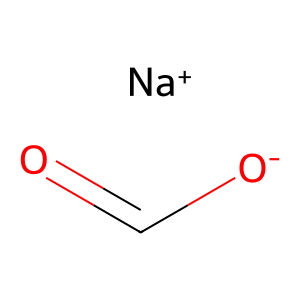 Cas:141-53-7

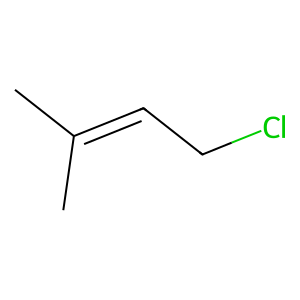 Cas:503-60-6
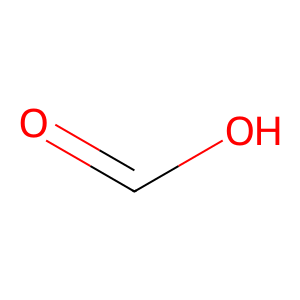 Cas:64-18-6

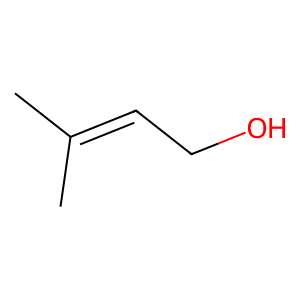 Cas:556-82-1
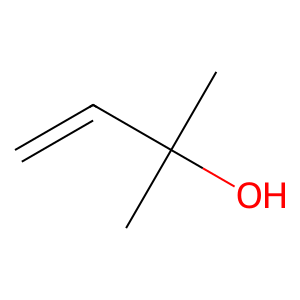 Cas:115-18-4