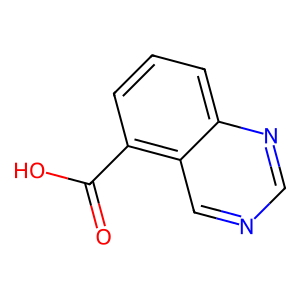
Quinazoline-5-carboxylic acid
Names and Identifiers of Quinazoline-5-carboxylic acid
CAS Number |
1638759-71-3 |
|---|---|
IUPAC Name |
quinazoline-5-carboxylic acid |
InChI |
InChI=1S/C9H6N2O2/c12-9(13)6-2-1-3-8-7(6)4-10-5-11-8/h1-5H,(H,12,13) |
InChIKey |
SAEANAIRQNGUJY-UHFFFAOYSA-N |
Canonical SMILES |
C1=CC(=C2C=NC=NC2=C1)C(=O)O |
Physical and chemical properties of Quinazoline-5-carboxylic acid
Molecular Formula |
C9H6N2O2 |
|---|---|
Molecular Weight |
174.16 |
Safety Information of Quinazoline-5-carboxylic acid

Applications of Quinazoline-5-carboxylic acid
Quinazoline-5-carboxylic acid and its derivatives are utilized in various applications:
- Pharmaceuticals: Due to their biological activities, they are being explored as potential drugs for treating cancer, glaucoma, and other diseases.
- Chemical Research: These compounds serve as important intermediates in organic synthesis and materials science.
- Biochemical Research: They are used in studies investigating enzyme inhibition and other biochemical pathways.
Interaction Studies of Quinazoline-5-carboxylic acid
Interaction studies involving quinazoline-5-carboxylic acid have primarily focused on its binding affinity to carbonic anhydrase enzymes. Molecular docking studies have provided insights into how modifications to the quinazoline structure can enhance binding efficiency and selectivity towards specific isoforms of these enzymes. Such studies are crucial for optimizing lead compounds in drug development.
Biological Activity of Quinazoline-5-carboxylic acid
Quinazoline-5-carboxylic acid exhibits significant biological activities, particularly as an inhibitor of carbonic anhydrases, which are enzymes involved in various physiological processes. Studies have shown that derivatives of this compound can inhibit specific isoforms of carbonic anhydrases with varying degrees of potency, making them potential candidates for therapeutic applications in treating conditions such as glaucoma and cancer. Additionally, quinazoline derivatives have been investigated for their anti-inflammatory and antitumor properties.