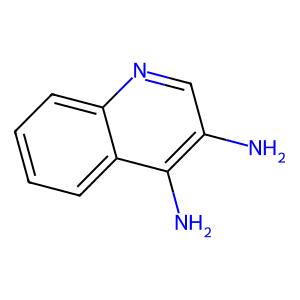
Quinoline-3,4-diamine
CAS No.:
87751-33-5
M. Wt:
159.188
M. Fa:
C9H9N3
InChI Key:
UTOMICFLROGMAE-UHFFFAOYSA-N
Names and Identifiers of Quinoline-3,4-diamine
CAS Number |
87751-33-5 |
|---|---|
EC Number |
980-196-0 |
MDL Number |
MFCD00666954 |
IUPAC Name |
quinoline-3,4-diamine |
InChI |
InChI=1S/C9H9N3/c10-7-5-12-8-4-2-1-3-6(8)9(7)11/h1-5H,10H2,(H2,11,12) |
InChIKey |
UTOMICFLROGMAE-UHFFFAOYSA-N |
Canonical SMILES |
C1=CC=C2C(=C1)C(=C(C=N2)N)N |
UNSPSC Code |
12352100 |
Physical and chemical properties of Quinoline-3,4-diamine
Acidity coefficient |
8.98±0.50(Predicted) |
|---|---|
Boiling Point |
384.3±27.0 °C at 760 mmHg |
Density |
1.3±0.1 g/cm3 |
Exact Mass |
159.079651 |
Flash Point |
214.4±10.9 °C |
H Bond Acceptors |
3 |
H Bond Donors |
2 |
Index of Refraction |
1.775 |
LogP |
1.44 |
Melting Point |
129 °C |
Molecular Formula |
C9H9N3 |
Molecular Weight |
159.188 |
PSA |
64.93000 |
Storage condition |
2-8°C |
Vapour Pressure |
0.0±0.9 mmHg at 25°C |
Safety Information of Quinoline-3,4-diamine

Applications of Quinoline-3,4-diamine
Quinoline-3,4-diamine has several applications:
- Pharmaceuticals: It serves as a key intermediate in the synthesis of various medicinal compounds.
- Fluorescent Probes: Its derivatives are used in the development of probes for detecting biological molecules like nitric oxide in living cells.
- Material Science: Quinoline derivatives are explored for their potential use in organic electronics and photonic devices due to their electronic properties.
Interaction Studies of Quinoline-3,4-diamine
Interaction studies involving quinoline-3,4-diamine focus on its binding affinity with biological targets such as enzymes and receptors. These studies help elucidate its mechanism of action and potential therapeutic effects. For instance, research has demonstrated that certain derivatives can effectively inhibit specific enzymes associated with disease pathways, suggesting their utility as drug candidates.
Biological Activity of Quinoline-3,4-diamine
Quinoline-3,4-diamine exhibits significant biological activities, including:
- Antimicrobial Properties: It has shown effectiveness against various bacterial strains.
- Anticancer Activity: Some studies indicate that derivatives of quinoline-3,4-diamine possess cytotoxic effects against cancer cell lines.
- Anti-inflammatory Effects: The compound has been investigated for its potential to reduce inflammation in biological systems.
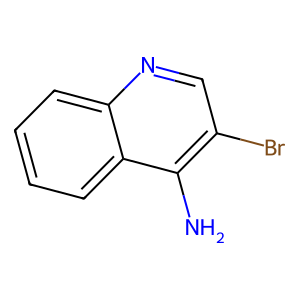 Cas:36825-36-2

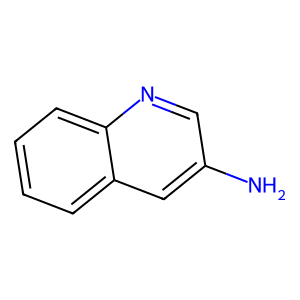 Cas:580-17-6
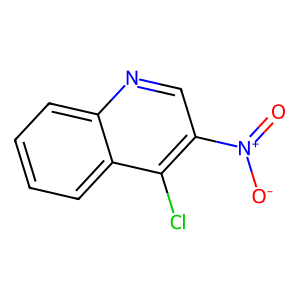 Cas:39061-97-7