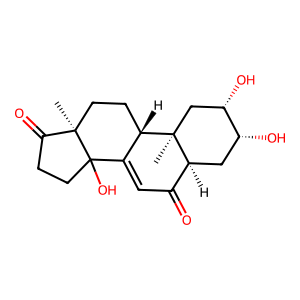
Rubrosterone
Names and Identifiers of Rubrosterone
CAS Number |
19466-41-2 |
|---|---|
IUPAC Name |
(2S,3R,5R,9R,10R,13S)-10,13-dimethyl-2,3,14-tris(oxidanyl)-1,2,3,4,5,9,11,12,15,16-decahydrocyclopenta[a]phenanthrene-6,17-dione |
Canonical SMILES |
C[C@]12CC[C@H]3C(=CC(=O)[C@H]4[C@@]3(C[C@@H]([C@@H](C4)O)O)C)C1(CCC2=O)O |
Physical and chemical properties of Rubrosterone
Boiling Point |
540.7ºC at 760mmHg |
|---|---|
Density |
1.34g/cm3 |
Exact Mass |
334.17800 |
Flash Point |
294.8ºC |
Index of Refraction |
1.609 |
LogP |
1.14390 |
Molecular Formula |
C19H26O5 |
Molecular Weight |
334.41 |
PSA |
94.83000 |
Vapour Pressure |
6.06E-14mmHg at 25°C |
Applications of Rubrosterone
Rubrosterone has several promising applications:
- Agriculture: Its role as an insect-molting hormone positions it as a potential biopesticide, offering an environmentally friendly alternative to synthetic pesticides.
- Pharmaceuticals: Due to its biological activity, rubrosterone may be explored for therapeutic uses in managing inflammation or other physiological conditions.
- Research: As a model compound for studying steroid hormones and their mechanisms of action in both insects and vertebrates.
Interaction Studies of Rubrosterone
Studies investigating the interactions of rubrosterone with biological systems have highlighted its binding affinity for ecdysteroid receptors. These interactions are crucial for understanding how rubrosterone influences gene expression related to growth and development in insects. Furthermore, research into its potential synergistic effects when combined with other compounds is ongoing, particularly in agricultural contexts where enhancing pest resistance is desired.
Biological Activity of Rubrosterone
Rubrosterone exhibits several biological activities that are primarily linked to its role as an insect-molting hormone. It has been shown to influence physiological processes such as growth, development, and reproduction in insects. The compound acts similarly to ecdysteroids by binding to specific receptors that regulate gene expression associated with these processes.
Research indicates that rubrosterone may also possess anti-inflammatory properties and could have implications for agricultural applications as a biopesticide due to its effects on insect physiology.