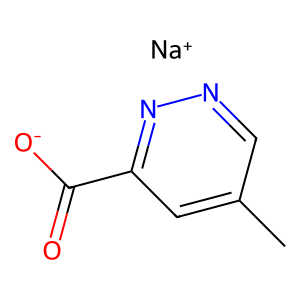
Sodium 5-methylpyridazine-3-carboxylate
Names and Identifiers of Sodium 5-methylpyridazine-3-carboxylate
CAS Number |
1955557-83-1 |
|---|---|
IUPAC Name |
sodium;5-methylpyridazine-3-carboxylate |
InChI |
InChI=1S/C6H6N2O2.Na/c1-4-2-5(6(9)10)8-7-3-4;/h2-3H,1H3,(H,9,10);/q;+1/p-1 |
InChIKey |
RINNLLXQIGULSS-UHFFFAOYSA-M |
Canonical SMILES |
CC1=CC(=NN=C1)C(=O)[O-].[Na+] |
Safety Information of Sodium 5-methylpyridazine-3-carboxylate

Applications of Sodium 5-methylpyridazine-3-carboxylate
Sodium 5-methylpyridazine-3-carboxylate has several potential applications:
- Pharmaceuticals: It may serve as an intermediate in the synthesis of various medicinal compounds.
- Agricultural Chemicals: Its derivatives could be explored for use as herbicides or fungicides.
- Chemical Research: The compound can be utilized in studies related to heterocyclic chemistry and material science.
The exploration of these applications is ongoing, with research focusing on optimizing its properties for specific uses.
Interaction Studies of Sodium 5-methylpyridazine-3-carboxylate
Interaction studies involving sodium 5-methylpyridazine-3-carboxylate primarily focus on its reactivity with other chemical species. Key areas include:
- Complexation with Metal Ions: Investigating how this compound interacts with transition metals could reveal potential catalytic properties.
- Drug Interactions: Understanding how it interacts with biological targets may provide insights into its pharmacological effects.
Such studies are essential for elucidating the compound's role in various chemical and biological contexts.
Biological Activity of Sodium 5-methylpyridazine-3-carboxylate
Research into the biological activity of sodium 5-methylpyridazine-3-carboxylate suggests potential applications in pharmacology. Compounds containing pyridazine rings have been associated with various biological activities, including:
- Antimicrobial Properties: Some derivatives exhibit antibacterial and antifungal activities.
- Anti-inflammatory Effects: Certain pyridazine derivatives have shown promise in reducing inflammation.
- Antitumor Activity: Investigations indicate that some compounds may inhibit cancer cell growth.
The specific biological effects of sodium 5-methylpyridazine-3-carboxylate require further study to establish its efficacy and mechanisms of action.