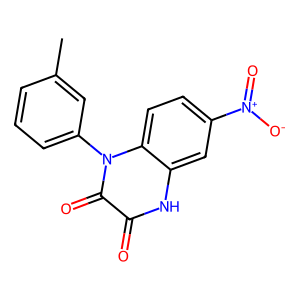
TIMTEC-BB SBB006340
CAS No.:
540514-92-9
M. Wt:
297.266
M. Fa:
C15H11N3O4
InChI Key:
-
Names and Identifiers of TIMTEC-BB SBB006340
CAS Number |
540514-92-9 |
|---|---|
IUPAC Name |
4-(3-methylphenyl)-7-nitro-1H-quinoxaline-2,3-dione |
Canonical SMILES |
CC1=CC(=CC=C1)N2C3=C(C=C(C=C3)[N+](=O)[O-])NC(=O)C2=O |
Physical and chemical properties of TIMTEC-BB SBB006340
Density |
1.4±0.1 g/cm3 |
|---|---|
Exact Mass |
297.074951 |
Index of Refraction |
1.658 |
LogP |
2.93 |
Molecular Formula |
C15H11N3O4 |
Molecular Weight |
297.266 |
Applications of TIMTEC-BB SBB006340
The applications of 3-hydroxy-1-(3-methylphenyl)-6-nitroquinoxalin-2(1H)-one are diverse, including:
- Pharmaceutical Development: Used as a scaffold for designing new drugs targeting bacterial infections and cancer.
- Research Tool: Serves as a biochemical probe in studies investigating enzyme inhibition and receptor interactions.
- Material Science: Potentially useful in developing novel materials due to its unique chemical properties.
These applications underline its significance in both medicinal chemistry and material sciences.
Interaction Studies of TIMTEC-BB SBB006340
Interaction studies involving 3-hydroxy-1-(3-methylphenyl)-6-nitroquinoxalin-2(1H)-one focus on its binding affinities and mechanisms of action. Key findings include:
- Enzyme Inhibition: The compound has been shown to inhibit specific enzymes involved in metabolic pathways, which can lead to therapeutic effects.
- Receptor Binding: Studies suggest that it may interact with neurotransmitter receptors, providing insights into its neuroprotective properties.
These interactions are crucial for understanding the pharmacodynamics and pharmacokinetics of the compound.
Biological Activity of TIMTEC-BB SBB006340
3-hydroxy-1-(3-methylphenyl)-6-nitroquinoxalin-2(1H)-one has shown promising biological activities, including:
- Antimicrobial Activity: Exhibits inhibitory effects against various bacterial strains.
- Anticancer Properties: Demonstrates potential cytotoxic effects on cancer cell lines, suggesting its role in cancer therapy.
- Neuroprotective Effects: Investigated for its ability to protect neuronal cells, making it a candidate for treating neurodegenerative diseases.
These activities highlight the compound's potential as a lead structure in drug discovery.