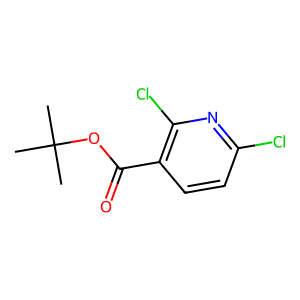
Tert-butyl 2,6-dichloronicotinate
CAS No.:
1013647-75-0
M. Wt:
248.106
M. Fa:
C10H11Cl2NO2
InChI Key:
GTWXYRAFRYVGNS-UHFFFAOYSA-N
Appearance:
Colorless Solid
Names and Identifiers of Tert-butyl 2,6-dichloronicotinate
CAS Number |
1013647-75-0 |
|---|---|
MDL Number |
MFCD26396106 |
IUPAC Name |
tert-butyl 2,6-dichloropyridine-3-carboxylate |
InChI |
InChI=1S/C10H11Cl2NO2/c1-10(2,3)15-9(14)6-4-5-7(11)13-8(6)12/h4-5H,1-3H3 |
InChIKey |
GTWXYRAFRYVGNS-UHFFFAOYSA-N |
Canonical SMILES |
CC(C)(C)OC(=O)C1=C(N=C(C=C1)Cl)Cl |
UNSPSC Code |
12352100 |
Physical and chemical properties of Tert-butyl 2,6-dichloronicotinate
Boiling Point |
304.3±37.0 °C at 760 mmHg |
|---|---|
Density |
1.3±0.1 g/cm3 |
Exact Mass |
247.016678 |
Flash Point |
137.9±26.5 °C |
H Bond Acceptors |
2 |
H Bond Donors |
0 |
Index of Refraction |
1.528 |
LogP |
3.13 |
Molecular Formula |
C10H11Cl2NO2 |
Molecular Weight |
248.106 |
Vapour Pressure |
0.0±0.6 mmHg at 25°C |
Safety Information of Tert-butyl 2,6-dichloronicotinate

Applications of Tert-butyl 2,6-dichloronicotinate
Tert-butyl 2,6-dichloronicotinate has several notable applications:
- Pharmaceutical Development: Its derivatives are being explored for their potential as new drugs targeting various diseases.
- Agricultural Chemicals: It can serve as an active ingredient in pesticides or herbicides due to its biological activity against pests.
- Chemical Intermediates: Used in synthesizing other complex organic molecules in research and industrial applications.
Interaction Studies of Tert-butyl 2,6-dichloronicotinate
Research into the interactions of tert-butyl 2,6-dichloronicotinate with biological systems has revealed:
- Receptor Binding: Studies indicate that it may bind to specific receptors or enzymes, affecting their activity and leading to biological responses.
- Metabolic Pathways: Understanding how this compound is metabolized can provide insights into its efficacy and safety profiles in therapeutic contexts.
Biological Activity of Tert-butyl 2,6-dichloronicotinate
Tert-butyl 2,6-dichloronicotinate has been studied for its biological activities, particularly in the context of:
- Antimicrobial Properties: Some studies suggest that derivatives of this compound exhibit antimicrobial effects against various pathogens.
- Inhibition of Enzymes: It may act as an inhibitor for certain enzymes involved in metabolic pathways, potentially impacting drug metabolism.
- Pharmacological
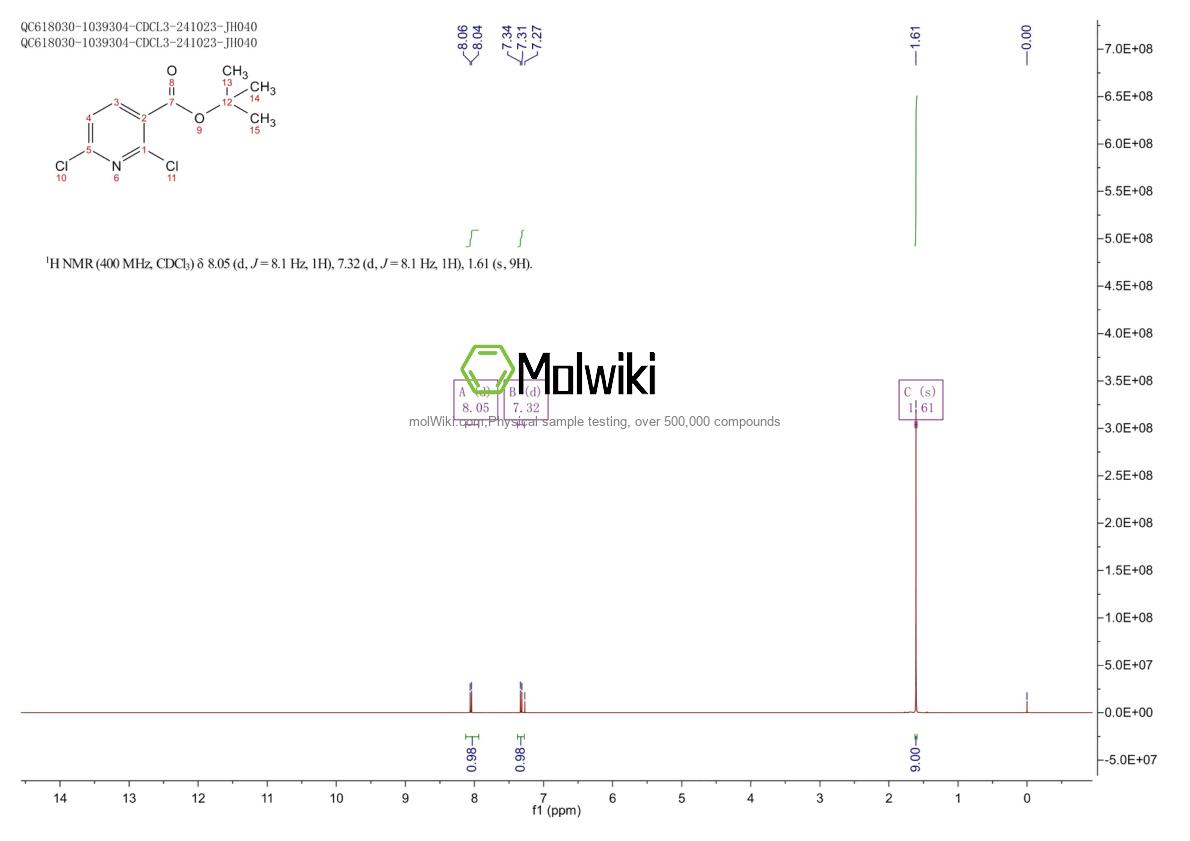
Physical sample testing spectrum (NMR) of Tert-butyl 2,6-dichloronicotinate
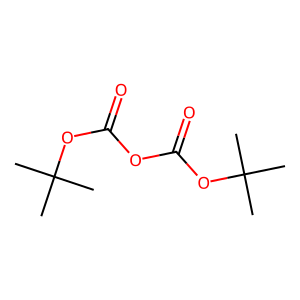 Cas:24424-99-5

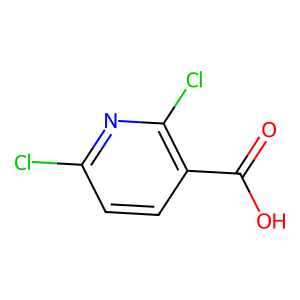 Cas:38496-18-3
