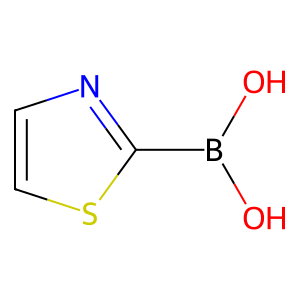
Thiazol-2-ylboronic acid
Names and Identifiers of Thiazol-2-ylboronic acid
CAS Number |
389630-95-9 |
|---|---|
IUPAC Name |
1,3-thiazol-2-ylboronic acid |
InChI |
InChI=1S/C3H4BNO2S/c6-4(7)3-5-1-2-8-3/h1-2,6-7H |
InChIKey |
JWUGKJKBCKJFOU-UHFFFAOYSA-N |
Canonical SMILES |
B(C1=NC=CS1)(O)O |
Physical and chemical properties of Thiazol-2-ylboronic acid
Acidity coefficient |
7.68±0.53(Predicted) |
|---|---|
Boiling Point |
320.9±25.0 °C at 760 mmHg |
Density |
1.4±0.1 g/cm3 |
Exact Mass |
129.005585 |
Flash Point |
147.9±23.2 °C |
Index of Refraction |
1.565 |
LogP |
0.76 |
Molecular Formula |
C3H4BNO2S |
Molecular Weight |
128.945 |
PSA |
81.59000 |
Vapour Pressure |
0.0±0.7 mmHg at 25°C |
Safety Information of Thiazol-2-ylboronic acid

Applications of Thiazol-2-ylboronic acid
Thiazol-2-ylboronic acid has several applications across different fields:
- Organic Synthesis: It serves as a key intermediate in the synthesis of pharmaceuticals and agrochemicals through carbon-carbon bond formation.
- Material Science: The compound is utilized in developing functional materials due to its ability to form stable complexes with various substrates.
- Biological Research: Its derivatives are explored for their potential therapeutic effects against various diseases, including cancer and neurodegenerative disorders.
Interaction Studies of Thiazol-2-ylboronic acid
Studies focusing on the interactions of thiazol-2-ylboronic acid with biological targets have revealed its potential as an enzyme inhibitor. For instance, research has indicated that certain derivatives can effectively inhibit specific kinases involved in cell signaling pathways, which is crucial for developing new cancer therapies. Additionally, its interactions with proteins and nucleic acids are being investigated to understand its role in cellular processes better.
Biological Activity of Thiazol-2-ylboronic acid
Thiazol-2-ylboronic acid exhibits significant biological activity, particularly in medicinal chemistry. Compounds containing thiazole moieties are often investigated for their potential as antimicrobial agents, anti-inflammatory drugs, and inhibitors of various enzymes. For instance, derivatives of thiazole have been shown to inhibit certain kinases involved in cancer progression and are being explored for their therapeutic potential against diseases like Alzheimer's.