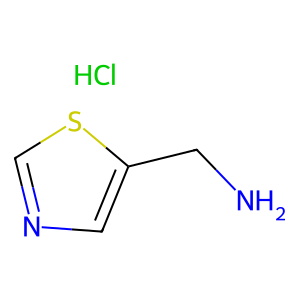
Thiazol-5-ylmethanamine hydrochloride
Names and Identifiers of Thiazol-5-ylmethanamine hydrochloride
CAS Number |
131052-46-5 |
|---|---|
EC Number |
802-828-5 |
MDL Number |
MFCD06738808 |
IUPAC Name |
1,3-thiazol-5-ylmethanamine;hydrochloride |
InChI |
InChI=1S/C4H6N2S.ClH/c5-1-4-2-6-3-7-4;/h2-3H,1,5H2;1H |
InChIKey |
WZJFBMHEYMPACF-UHFFFAOYSA-N |
Canonical SMILES |
C1=C(SC=N1)CN.Cl |
UNSPSC Code |
12352100 |
Physical and chemical properties of Thiazol-5-ylmethanamine hydrochloride
Boiling Point |
255.1ºC at 760 mmHg |
|---|---|
Exact Mass |
150.001846 |
Flash Point |
108.1ºC |
LogP |
2.10410 |
Molecular Formula |
C4H7ClN2S |
Molecular Weight |
150.630 |
PSA |
67.15000 |
Storage condition |
under inert gas (nitrogen or Argon) at 2-8°C |
Safety Information of Thiazol-5-ylmethanamine hydrochloride


Applications of Thiazol-5-ylmethanamine hydrochloride
Thiazol-5-ylmethanamine hydrochloride finds applications in various fields:
- Pharmaceuticals: It serves as an intermediate in the synthesis of drugs due to its biological activity.
- Agriculture: The compound may be utilized in developing agrochemicals with fungicidal or herbicidal properties.
- Chemical Research: It is used as a building block in organic synthesis for creating more complex molecules.
Its versatility makes it an important compound in both research and industrial applications.
Interaction Studies of Thiazol-5-ylmethanamine hydrochloride
Interaction studies involving thiazol-5-ylmethanamine hydrochloride focus on its binding affinity to various biological targets. These studies help elucidate its mechanism of action and potential side effects. Key areas include:
- Protein Binding Studies: Understanding how the compound interacts with proteins can reveal its pharmacokinetic properties.
- Enzyme Inhibition Studies: Assessing its ability to inhibit specific enzymes provides insights into its therapeutic potential.
Such studies are crucial for optimizing drug design and improving efficacy while minimizing toxicity.
Biological Activity of Thiazol-5-ylmethanamine hydrochloride
Thiazol-5-ylmethanamine hydrochloride exhibits significant biological activity, particularly in pharmacology. It has been studied for its potential effects on various biological targets, including:
- Antimicrobial Activity: Compounds containing thiazole rings often demonstrate antimicrobial properties, making them candidates for antibiotic development.
- Anticancer Properties: Some studies suggest that thiazole derivatives can inhibit cancer cell proliferation through various mechanisms.
- Neurological Effects: The compound may influence neurotransmitter systems, indicating potential applications in treating neurological disorders.
Research continues to explore its full range of biological activities and therapeutic potential.
Physical sample testing spectrum (NMR) of Thiazol-5-ylmethanamine hydrochloride
