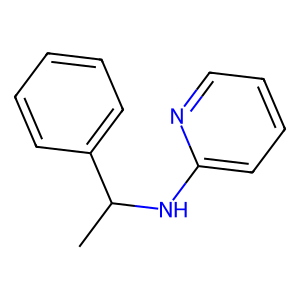
n-(1-Phenylethyl)pyridin-2-amine
CAS No.:
81936-48-3
M. Wt:
198.26
M. Fa:
C13H14N2
InChI Key:
IWMMJPDCLGWNLZ-UHFFFAOYSA-N
Names and Identifiers of n-(1-Phenylethyl)pyridin-2-amine
CAS Number |
81936-48-3 |
|---|---|
MDL Number |
MFCD11122791 |
IUPAC Name |
N-(1-phenylethyl)pyridin-2-amine |
InChI |
InChI=1S/C13H14N2/c1-11(12-7-3-2-4-8-12)15-13-9-5-6-10-14-13/h2-11H,1H3,(H,14,15) |
InChIKey |
IWMMJPDCLGWNLZ-UHFFFAOYSA-N |
Canonical SMILES |
CC(NC1=CC=CC=N1)C1=CC=CC=C1 |
UNSPSC Code |
12352100 |
Physical and chemical properties of n-(1-Phenylethyl)pyridin-2-amine
H Bond Acceptors |
2 |
|---|---|
H Bond Donors |
1 |
LogP |
2.96385718833333 |
Molecular Formula |
C13H14N2 |
Molecular Weight |
198.26 |
Safety Information of n-(1-Phenylethyl)pyridin-2-amine

Applications of n-(1-Phenylethyl)pyridin-2-amine
N-(1-phenylethyl)pyridin-2-amine has diverse applications across different fields:
- Pharmaceuticals: As a precursor or active ingredient in the development of drugs targeting various diseases due to its biological activity.
- Material Science: Its derivatives are explored for use in non-linear optical materials and sensors due to their unique electronic properties.
- Agriculture: Compounds related to this structure may be investigated for their potential use as agrochemicals.
Interaction Studies of n-(1-Phenylethyl)pyridin-2-amine
Interaction studies involving N-(1-phenylethyl)pyridin-2-amine have focused on its binding affinities and interactions with biological targets:
- Protein-Ligand Interactions: Studies using molecular docking simulations have provided insights into how this compound interacts with target proteins, influencing its design as a drug candidate.
- Receptor Binding Studies: Experimental data have demonstrated its ability to bind selectively to certain receptors, which is crucial for developing targeted therapies.
Biological Activity of n-(1-Phenylethyl)pyridin-2-amine
N-(1-phenylethyl)pyridin-2-amine exhibits notable biological activities, particularly in pharmacology. It has been studied for its potential as an inhibitor of various enzymes and receptors:
- CYP Enzyme Inhibition: This compound has been identified as an inhibitor of cytochrome P450 enzymes, including CYP1A2 and CYP2C19, which are crucial for drug metabolism.
- Antimicrobial Properties: Research indicates that derivatives of this compound may possess antimicrobial activity, making them candidates for further development in medicinal chemistry.
- Neuropharmacological Effects: Some studies suggest that compounds related to N-(1-phenylethyl)pyridin-2-amine may influence neurotransmitter systems, pointing to potential applications in treating neurological disorders.
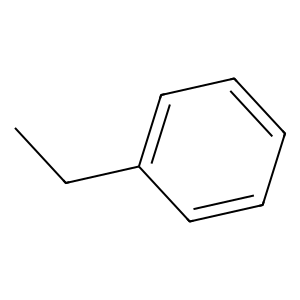 Cas:100-41-4

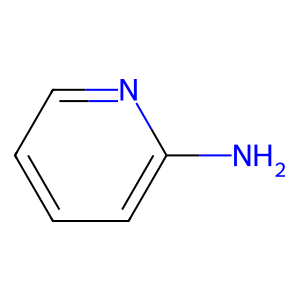 Cas:504-29-0

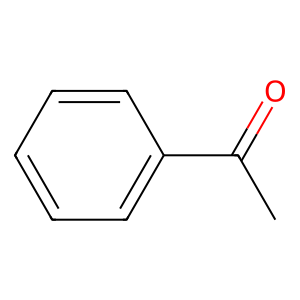 Cas:98-86-2