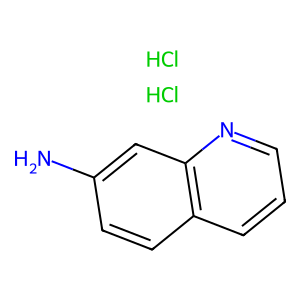
quinolin-7-amine;dihydrochloride
Names and Identifiers of quinolin-7-amine;dihydrochloride
CAS Number |
897439-74-6 |
|---|---|
IUPAC Name |
quinolin-7-amine;dihydrochloride |
Canonical SMILES |
C1=CC2=C(C=C(C=C2)N)N=C1.Cl.Cl |
Physical and chemical properties of quinolin-7-amine;dihydrochloride
Molecular Formula |
C9H10Cl2N2 |
|---|---|
Molecular Weight |
217.09 |
Safety Information of quinolin-7-amine;dihydrochloride

Applications of quinolin-7-amine;dihydrochloride
Quinolin-7-amine dihydrochloride has a wide range of applications:
- Pharmaceuticals: It serves as a building block for developing new drugs with antimicrobial, antifungal, and anticancer properties.
- Dyes and Pigments: Due to its chromophoric properties, this compound is utilized in producing dyes and pigments.
- Research: It is employed in scientific studies exploring its biological mechanisms and potential therapeutic applications.
These applications underscore the compound's significance in both industrial and research settings.
Interaction Studies of quinolin-7-amine;dihydrochloride
Interaction studies involving quinolin-7-amine dihydrochloride have focused on its binding affinity to various biological targets. It has been shown to interact with DNA and several enzymes involved in metabolic pathways. These interactions are crucial for understanding the compound's mechanism of action and its potential therapeutic effects.
Biological Activity of quinolin-7-amine;dihydrochloride
Quinolin-7-amine dihydrochloride exhibits significant biological activity, making it a subject of interest in pharmacological studies. Research indicates that this compound possesses antimicrobial and antifungal properties, inhibiting the growth of various pathogens. Moreover, it has been investigated for potential anticancer effects, as it may induce apoptosis in cancer cells by interfering with DNA replication and transcription processes. The compound also demonstrates inhibitory effects on key metabolic enzymes, further contributing to its biological profile.