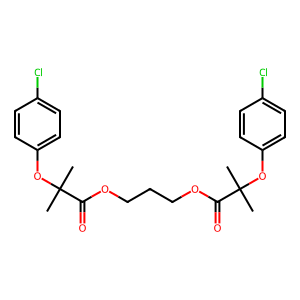
simfibrate
Names and Identifiers of simfibrate
CAS Number |
14929-11-4 |
|---|---|
IUPAC Name |
3-[2-(4-chloranylphenoxy)-2-methyl-propanoyl]oxypropyl 2-(4-chloranylphenoxy)-2-methyl-propanoate |
Canonical SMILES |
CC(C)(C(=O)OCCCOC(=O)C(C)(C)OC1=CC=C(C=C1)Cl)OC2=CC=C(C=C2)Cl |
Physical and chemical properties of simfibrate
Boiling Point |
553ºC at 760mmHg |
|---|---|
Density |
1.242g/cm3 |
Exact Mass |
468.11100 |
Flash Point |
178.3ºC |
Index of Refraction |
1.541 |
LogP |
5.48490 |
Melting Point |
51-53° |
Molecular Formula |
C23H26Cl2O6 |
Molecular Weight |
469.35500 |
PSA |
71.06000 |
Vapour Pressure |
2.85E-12mmHg at 25°C |
Applications of simfibrate
Simfibrate is primarily used as a therapeutic agent for managing dyslipidemia, particularly in patients with elevated triglyceride levels. It is often prescribed alongside lifestyle modifications such as diet and exercise. Additionally, simfibrate has potential applications in research settings for studying lipid metabolism and peroxisome proliferation. Its unique mechanism of action also makes it a candidate for exploring new treatments for metabolic syndrome.
Biological Activity of simfibrate
Simfibrate exhibits significant biological activity, primarily through its action on PPARs. It enhances the expression of genes involved in fatty acid oxidation and decreases the synthesis of triglycerides in the liver. Studies have shown that simfibrate can induce peroxisome proliferation in liver cells, leading to increased fatty acid oxidation and reduced lipid accumulation. Furthermore, it has been observed to have antioxidant properties, which may help mitigate oxidative stress associated with hyperlipidemia.