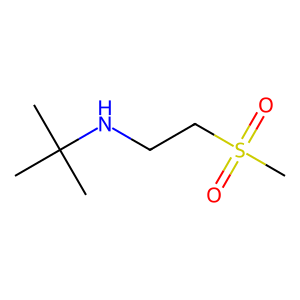
tert-butyl(2-methanesulfonylethyl)amine
CAS No.:
1183755-41-0
M. Wt:
179.28
M. Fa:
C7H17NO2S
InChI Key:
-
Names and Identifiers of tert-butyl(2-methanesulfonylethyl)amine
CAS Number |
1183755-41-0 |
|---|---|
IUPAC Name |
2-methyl-N-(2-methylsulfonylethyl)propan-2-amine |
Canonical SMILES |
CC(C)(C)NCCS(=O)(=O)C |
Physical and chemical properties of tert-butyl(2-methanesulfonylethyl)amine
Acidity coefficient |
8.39±0.38(Predicted) |
|---|---|
Boiling Point |
304.1±25.0 °C(Predicted) |
Density |
1.030±0.06 g/cm3(Predicted) |
Molecular Formula |
C7H17NO2S |
Molecular Weight |
179.28 |
Safety Information of tert-butyl(2-methanesulfonylethyl)amine

Applications of tert-butyl(2-methanesulfonylethyl)amine
Tert-butyl(2-methanesulfonylethyl)amine has potential applications in various fields:
- Pharmaceuticals: As a building block for drug development, especially in synthesizing sulfonamide-based antibiotics or other therapeutic agents.
- Organic Synthesis: Useful as a reagent or intermediate in complex organic synthesis pathways.
- Catalysis: Potentially serves as a catalyst or co-catalyst in organic reactions due to its steric and electronic properties.
Interaction Studies of tert-butyl(2-methanesulfonylethyl)amine
Research into the interaction of tert-butyl(2-methanesulfonylethyl)amine with biological systems is essential for understanding its potential therapeutic applications. Interaction studies may focus on:
- Binding Affinity: Evaluating how well this compound binds to target proteins or enzymes.
- Mechanism of Action: Understanding how it affects biochemical pathways or cellular processes.
- Toxicity Assessments: Investigating any adverse effects associated with its use in biological systems.
Biological Activity of tert-butyl(2-methanesulfonylethyl)amine
Tert-butyl(2-methanesulfonylethyl)amine exhibits various biological activities, particularly due to its structural components. Compounds with similar structures are often investigated for their pharmacological properties, including:
- Antimicrobial Activity: Sulfonamides are known for their antibacterial properties, potentially extending to this compound.
- Enzyme Inhibition: The presence of the methanesulfonyl group may allow for interactions with specific enzymes, making it a candidate for further biological studies.